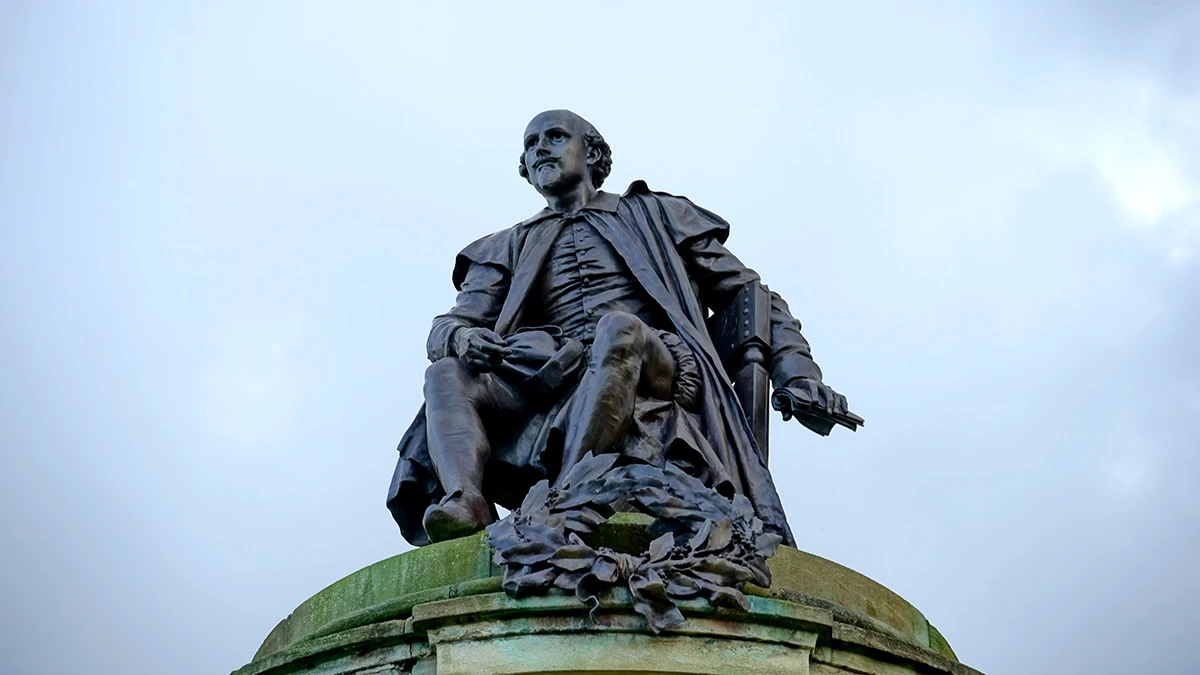
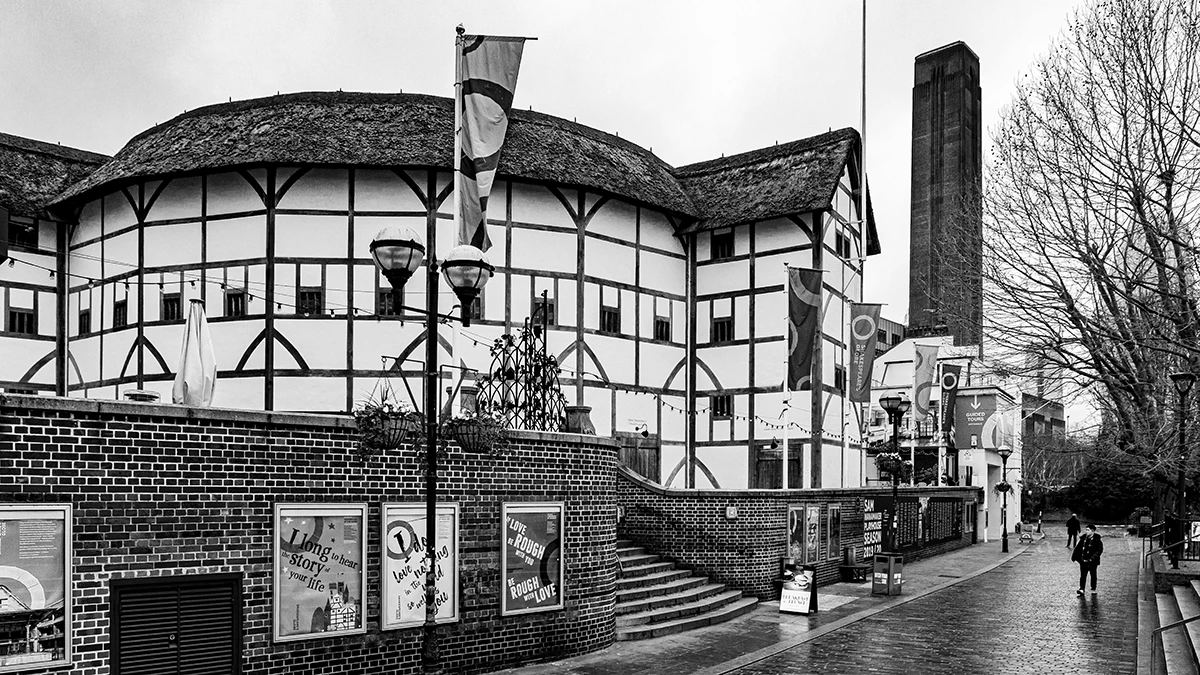
Eight Shakespeare phrases still used today



When Shakespeare was writing plays during the Early Modern period (around 1590–1613), he probably had no idea that people would still be repeating his words more than 400 years later.
There are many Shakespeare phrases that we still use in everyday English. Some are dramatic, some are funny, and some are so common that most people don’t realise they came from Shakespeare at all.
Part of Shakespeare’s genius was his ability to express emotions and ideas in short, memorable phrases. His plays were written for ordinary people as well as wealthy audiences, so his language was vivid, creative and easy to remember.
Below are eight of the most famous Shakespeare phrases we use today, along with what they mean and how we use them now.
Quick links menu:
- Good riddance
- Foregone conclusion
- Laughing stock
- In a pickle
- Wild goose chase
- Faint-hearted
- Vanish into thin air
- All that glitters is not gold
- The eternal impact of Shakespeare
Table of Contents
1. Good riddance
This phrase originates from the play Troilus and Cressida. It was spoken by Patroclus when Thersites leaves after a quarrel with Ajax and Achilles. After he exits, Patroclus says bluntly, “Good riddance.”
This idiom is used when we feel happy or relieved because something or someone unpleasant has gone away. Notice the connection with the word ‘rid’, which means to dispose of something – e.g. ‘I should get rid of the old computer as it no longer works’.
Although the noun ‘riddance’ is now rarely used on its own, Shakespeare’s ‘good riddance’ combination is still very much thriving in modern English.
It’s most often used when an annoying situation finally ends:
‘The noisy neighbours have moved out at last. Good riddance!’
Be careful, though. The phrase can sound quite rude, so it’s best used informally with people you know well.
2. Foregone conclusion
‘Foregone conclusion’ is from Shakespeare’s tragedy Othello and is spoken by Othello himself, the main character, when Iago tells him an invented story about Michael Cassio talking about Desdemona in his sleep.
“But this denotes a foregone conclusion: Tis a shrewd doubt, though it be a dream.”
If something is a ‘foregone conclusion’ it means the result is considered obvious or inevitable even before it happens.
In Othello’s case, he refers to his wife’s adultery as a foregone conclusion – he believes that it has happened before he knows for certain.
One of the most common Shakespeare phrases, it is still used in business, sport and everyday conversations today when we think a result is inevitable:
‘With their top players injured, losing the match seemed like a foregone conclusion.’
3. Laughing stock
Shakespeare incorporated the term ‘laughing stock’ into his play The Merry Wives of Windsor, although it has been found in earlier literature too.
His character Sir Hugh Evans says:
‘Pray you let us not be laughing-stocks to other men’s humours…’
If someone is a ‘laughing stock’, they are laughed at by those around them. The phrase has an interesting historical connection: in Shakespeare’s day, people were punished by being locked in wooden ‘stocks’ in public squares while the crowd mocked them. That image helps explain why a ‘laughing stock’ means a person who is publicly ridiculed.
We can use it in exactly the same way in modern English:
‘After tripping on stage during the performance, he felt like the laughing stock of the school.’
4. In a pickle
The charming phrase ‘in a pickle’ wasn’t invented by Shakespeare, but was popularised by him in The Tempest. It appears in an exchange between King Alonso and his jester, Trinculo, who says, “I have been in such a pickle since I saw you last…”
While in Shakespeare’s time it may have also meant ‘drunk’, it is largely understood to be connected with the idea of pickled vegetables in jars. If you’re ‘in a pickle’, you’re in a difficult or confusing situation that it’s hard to fix – much like a pickled cucumber in a jar!
It works perfectly in modern, informal English:
‘I’m in a bit of a pickle because I accidentally booked two flights for the same day.’
5. Wild goose chase
‘Wild goose chase’ originates from a popular horse race in Shakespeare’s time. The leading rider would take an unpredictable path, and the other riders would follow him, spreading out into the formation of geese in flight.
Shakespeare uses this metaphor in a playful conversation between Romeo and Mercutio. They are joking over who is more intelligent, and Romeo is taking the lead with clever puns. Mercutio replies with “Nay, if thy wits run the wild-goose chase, I have done,” meaning that Romeo has won their battle of wits.
Over time, the meaning changed into the idea of a hopeless or pointless search.
Today, if you’re on a ‘wild goose chase’, it means you’re searching for something that’s very difficult or impossible to find:
‘My daughter wanted a Pokemon pencil case so I went on a wild goose chase to three different shops but they didn’t have any.’
6. Faint-hearted
This adjective is used in the play Henry VI, when one of the characters is criticising King Henry VI: “Farewell, faint-hearted and degenerate king, In whose cold blood no spark of honour bides.”
If someone is ‘faint-hearted’, they lack courage or confidence when facing something difficult or frightening.
Today, the adjective is often used as part of the expression ‘not for the faint-hearted’. We say it when something is challenging, risky or emotionally intense:
‘Working for the emergency services is not for the faint-hearted.’
7. Vanish into thin air
The phrase ‘vanish into thin air’ is often linked to two quotes from Othello and The Tempest: “Go; vanish into air; away!” and “These our actors, as I foretold you, were all spirits and are melted into air, into thin air.”
These two phrases evolved into the expression we use now.
If something ‘vanishes into thin air’, it disappears suddenly and completely, often in a mysterious or surprising way.
The expression has kept almost exactly the same meaning in modern English and is still very common in everyday conversation. We often use it when we’re surprised that something has disappeared without explanation:
‘My keys were on the table a minute ago, and now they’ve vanished into thin air!’
8. All that glitters is not gold
The phrase ‘all that glitters is not gold’ comes from The Merchant of Venice.
Portia’s suitors must play a game where they have to choose one of three boxes, hoping to find Portia’s picture inside. The Prince of Morocco wrongly chooses the golden box. He opens it and instead of Portia’s picture, he finds a note which begins, “All that glisters is not gold…”
It means that appearances can be misleading. Today, the word glisters has been replaced with glitters, but the meaning is exactly the same:
‘Make sure you read the contract before you sign the job offer. It seems like a great opportunity, but all that glitters is not gold.’
The eternal impact of Shakespeare
These common Shakespeare phrases continue to influence the way we speak today, showing how ideas first spoken on the Elizabethan stage are still part of modern English conversation.
Shakespeare quotes in modern English appear in social situations, exams, workplace communication and popular culture.
If you would like to explore this topic further, you can read more in our related guides:
- Shakespeare and literary English in modern life
- Everyday words Shakespeare invented
- Shakespeare quotes explained in simple English
Ready to keep improving your English?
Don’t miss the current offer on the British Council English Online Gold and Platinum packages, which includes a free 7-day trial so you can experience flexible, guided learning before you commit.