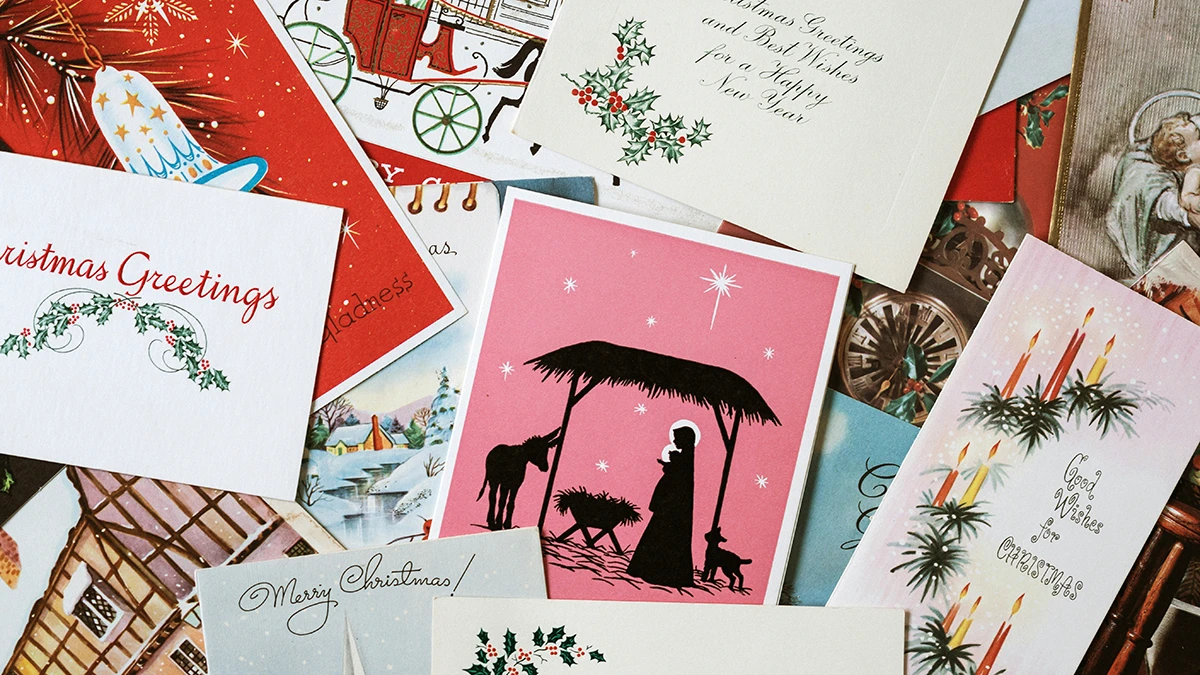
Card messages in English: What to write and how to say it



Card messages are a great way to practise real, everyday English. A card is short, it has a clear purpose and you write it for a real person, not for a textbook exercise. That makes it a perfect place to work on tone, word choice and how you sound in English.
To decide what to write in a card, think about the following questions:
- Who is this for?
- How well do you know them?
- What do you want them to feel when they read it?
These questions are great practice for all English writing, not just cards. The skills you build, such as reading a relationship, setting the correct tone and picking natural phrases, apply to your emails, chats and daily conversations, too.
This guide covers greeting card messages for any situation. We’ll show you how to find the right tone and give you phrases to use. We also have specific tips for birthdays, thank yous and times of sympathy.
Table of Contents
Why card writing is a great way to practise English
Writing messages for cards is a fast way to build your skills. Here’s why card messages are worth practising:
- They’re short, but not simple. A card message is often just one or two sentences. But in that small space, you still need to choose the right tone, words and level of formality.
- They train you to think about tone, not just grammar. You write to a close friend one way. You write to your manager another way. The grammar might be the same, but the words change. Learning to make that choice is a real skill.
- The skill transfers. Once you can judge tone in a card, it gets easier to judge tone in emails, messages and everyday conversation too.
In short, practising to write messages in cards builds skills you’ll use again and again.
Getting the tone right: formal vs informal
Many people worry about getting the tone wrong when deciding what to write in a card. The goal is to sound like yourself while matching the situation.
How to read the relationship (friend vs colleague vs boss vs stranger)
Before you start, think about your relationship with the person. Ask yourself:
- Would you hug this person? Shake their hand? Or just nod at them in the corridor?
- Do you see them socially or only at work?
- Is this a happy occasion or a sensitive one?
Your answers help you set the tone. A close friend’s birthday card can have jokes only the two of you understand. A colleague’s leaving card should be warm, but professional. A card for someone you don’t know well, like a client, should stay polite and simple.
Signs a card message is too formal or too informal
If you aren’t sure what to write in a card, ask: would I say this to them in person? If it sounds too much like a formal letter for a friend, or too casual for your boss, try again.
Keep an eye out for these signs:
- Too formal: Using very long sentences or avoiding contractions (‘I am’ instead of ‘I’m’) with friends.
- Too informal: Making inside jokes with people you don’t know well or using humour in a sensitive sympathy card.
Finding the right balance at work is key. You need to be warm enough to connect with colleagues, but keep your tone professional and respectful. Our guide on business etiquette: when to send a card at work (or not) will help you understand formality and tone in a professional environment.
Openers and closers you can use in almost any card
You don’t need to invent a new opening line every time. Here are some greeting card messages to help you get started.
Common opening lines (by formality level)
|
Informal (close friends and family) |
Just a quick note to say … I couldn’t let today go by without … Hope you’re having the best day! |
|
Neutral (most colleagues, acquaintances) |
I wanted to take a moment to … Wishing you a wonderful … |
|
Formal (clients, senior colleagues, people you don’t know well) |
On behalf of the whole team … I would like to congratulate you on … |
These lines work as a starting point. You can adjust them to fit how well you know the person.
Common closing lines (by formality level)
|
Informal (close friends and family) |
Lots of love, Take care, Speak soon, |
|
Neutral (most colleagues, acquaintances) |
Best wishes, Warm regards, All the best, |
|
Formal (clients, senior colleagues, people you don’t know well) |
With sincere thanks, Kindest regards, With best wishes for the future, |
Closing words are very important for thank-you cards. Our guide on how to write thank you card messages in English has many examples to help you show your gratitude.
When is a card expected? Cultural norms in English-speaking countries
In English-speaking cultures, cards are common for birthdays, weddings and new babies. They are also sent for sympathy, thank yous and holidays like Christmas. Sometimes, people send them just to say ‘get well’ or ‘thinking of you.’
Customs can vary by country. What is normal in the UK might be different in the US. If you aren’t sure if a card is needed, sending one is usually a nice gesture.
To learn more about the tradition of sending greetings cards, check out our blog on the history and culture of card giving.
Explore card writing by occasion
Now that you understand tone, you can write messages for cards that fit your occasion. Here are our specific card messages guides:
Origins of card writing and giving: history of greeting cards
Curious where this tradition comes from? This guide looks back through history, and shows how customs differ around the world.
What to write in a birthday card: Crafting memorable messages for your loved ones
Birthdays are the easiest place to start. The tone can be as playful or as simple as you like. This guide covers everything from close friends to colleagues you don’t know well.
How to write thank you card messages in English
A good thank-you message says something specific, not just ‘thanks’. Learn how to name exactly what you’re grateful for and why it mattered.
What to write in a congratulations message
From new jobs to exam results, this guide helps you celebrate someone’s news without repeating the same old phrases.
Beyond I love you: The secret to writing a romantic Valentine’s message
Romantic English has its own rules. This guide covers everything from light, fun messages to more heartfelt ones.
What to write in a sympathy card: Crafting heartfelt condolence messages
Sympathy cards are the hardest to get right, because honesty matters more than clever words. This guide gives you gentle, respectful phrases for a difficult moment.
Business etiquette: when to send a card at work (or not)
Not every workplace moment needs a card. Getting it wrong can feel awkward. This guide explains when a card fits and how to keep the right professional tone.
A few final tips before you write
Before you write your card messages, keep these tips in mind:
- Say something specific, not something general.
- One honest detail is worth more than several polite phrases.
- Keep it short if you’re not sure what to say. A few sincere words are better than a long, awkward paragraph.
- Don’t be afraid to keep it simple. The person reading your card cares far more about your meaning than your grammar.
Want to feel more confident with your everyday English and card messages?
Don’t miss the current offer on British Council English Online Gold and Platinum packages, which includes a free 7-day trial so you can experience flexible, guided learning before you commit.